
Tools & Materials
A quick run down of what I use, recommend and why mindset matters.
What materials do I need?
I get asked this a lot.
The very simple answer; whatever you already have.
Don’t let not having the ‘right’ tools become the excuse not to create.
Paper and a pen are the core elements you will need (preferably a pen that doesn’t smudge). Your canvas could be the edge of a newspaper, the inside of a cereal box and your tool of choice a biro or pencil.
When I was starting out I used pens and felt tips from my kids colouring box. Before investing in anything I wanted be sure I enjoyed creating and that it was something that I would continue to do.
Find the desire before you buy the materials, check it’s something you enjoy, we probably all have a stack of planned projects or tools or various wild ideas in our homes. Start doing the thing before you buy the things, that way you won’t waste your money.
And if you are like me and love buying art supplies (it’s borderline an addiction), but are always saving them for the right picture, or the good picture, or the special occasion, or you don’t want to mess up your brand-new clean sketchbook, just start using them before they dry out. Today is the day, today is special, this is the picture.
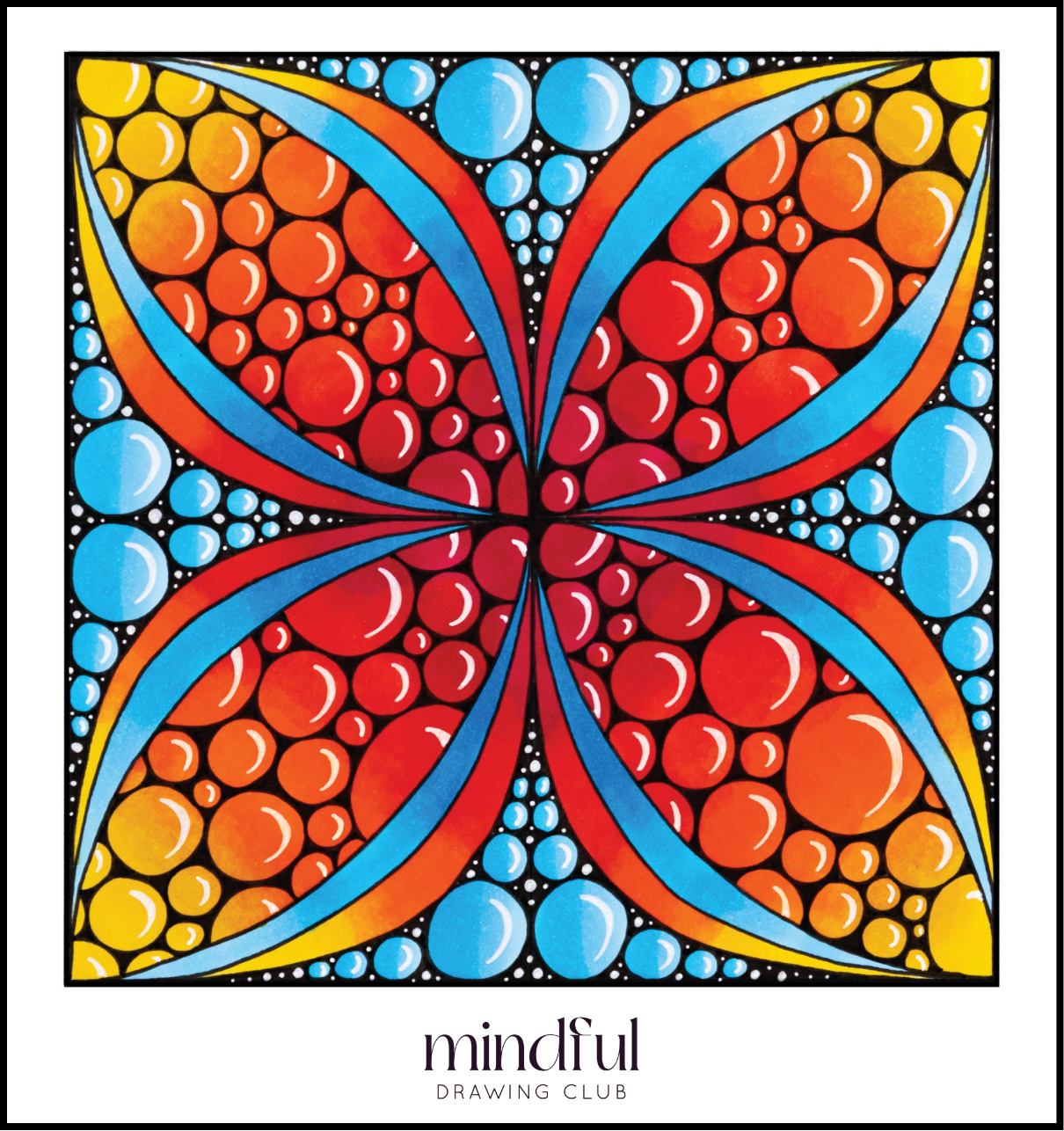
It doesn’t matter how it looks,
Or if it’s perfect and neat
What matters is how it make you feel,
There is a world of creativity at your feet

If you are looking for recommendations…
Start Small
Don’t buy the massive set of pens, or every colour of paint, buy a small set, see you if you like it and then you can expand and add to your collection.
It doesn’t have to be the best
Art supplies can be really expensive and if you’re not displaying or selling your art you don’t always need top of the range.
Buy good paper
If you invest in one thing, let it be paper. Paper can make the biggest difference to your work, beyond brushes or pens. Finding the right paper or canvas for the medium you are working will have the biggest impact on your creations.
What do I use to create?
Paper
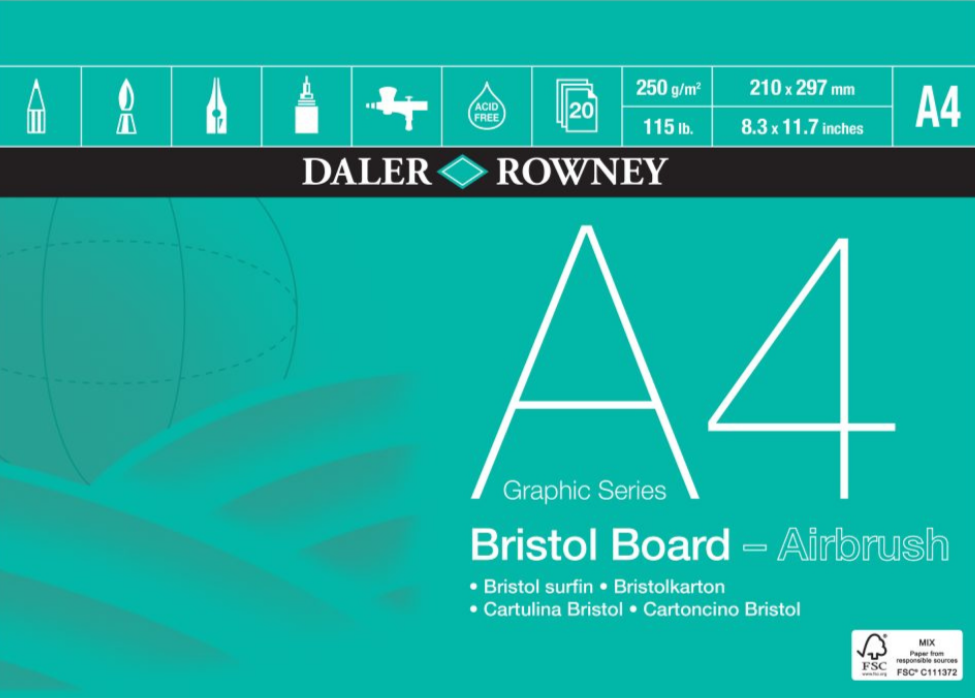
When using alcohol markers and pigments liners I use 250gsm Bristol Board, a few brands make Bristol Board Paper, Daler Rowney is my preferred choice.
As cheaper alternatives, a thick smooth card stock will work or a 250gsm marker paper. Marker paper can sometimes be a little greyer in colour so it’s worth buying in small quantities until you find one that you like.
TIP: with alcohol makers you want to avoid anything too absorbent or rough as the colours will bleed and the paper will take more ink from your pens (causing them to run out more quickly)
When using watercolours with paint pens I use a 250gsm mixed media paper. I’m still looking for a favourite, as the one I did use recently changed and the mix isn’t as good.
A few basics
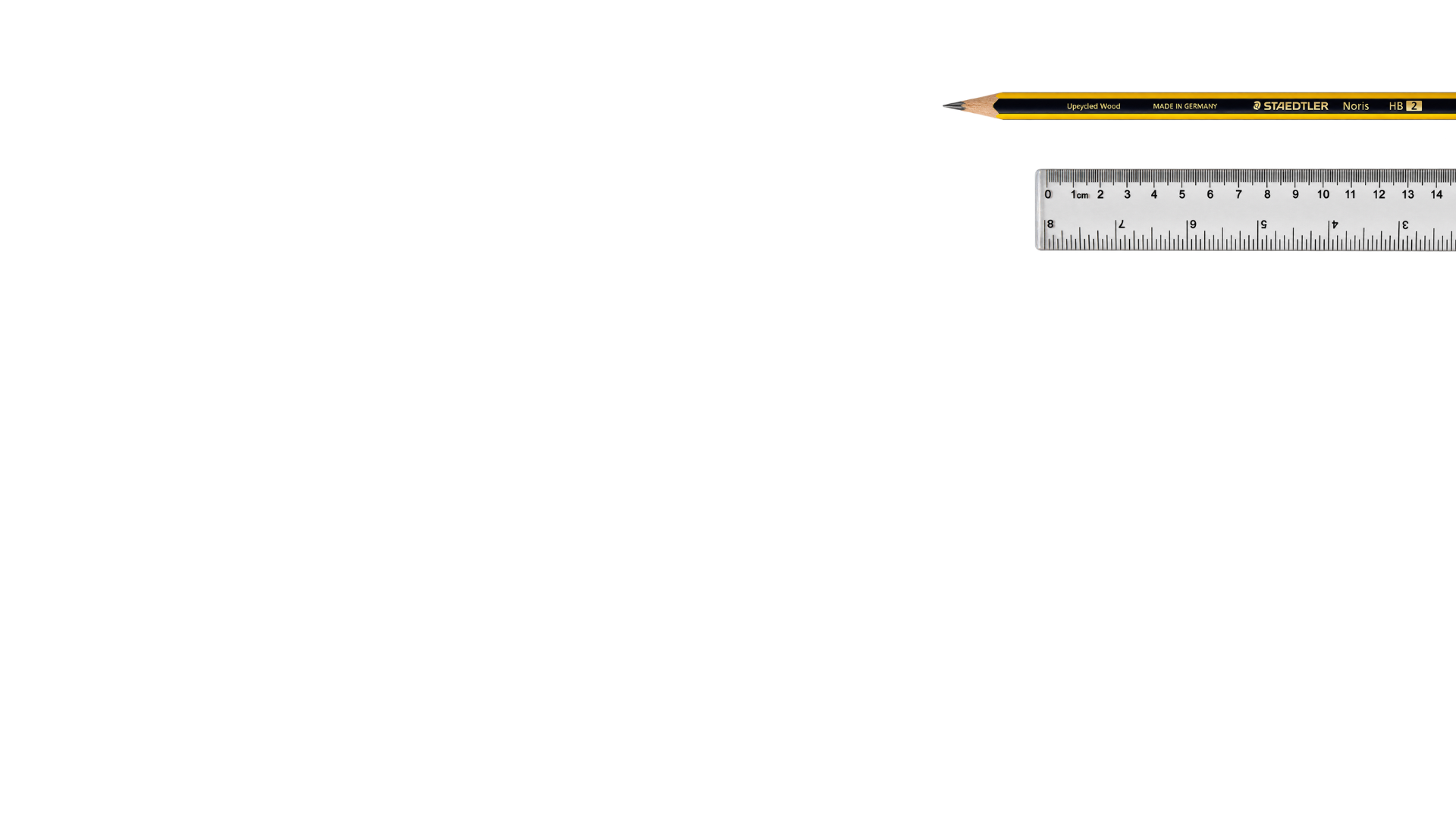
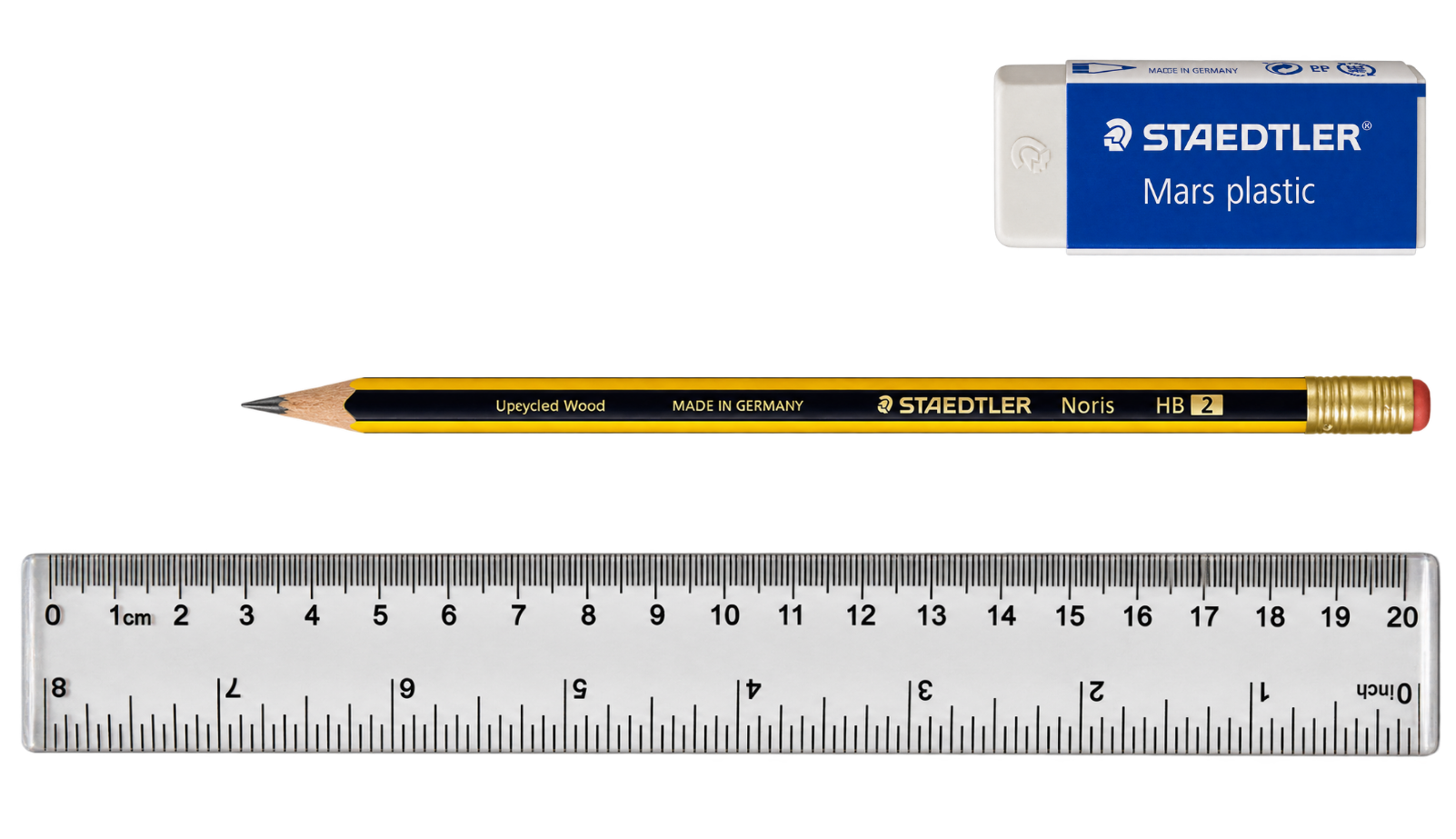
I mainly draw directly onto the paper in pen, but understand and appreciate this isn’t for everyone. A ruler, pencil and rubber are very useful for creating guidelines and for sketching designs before going in with pen.
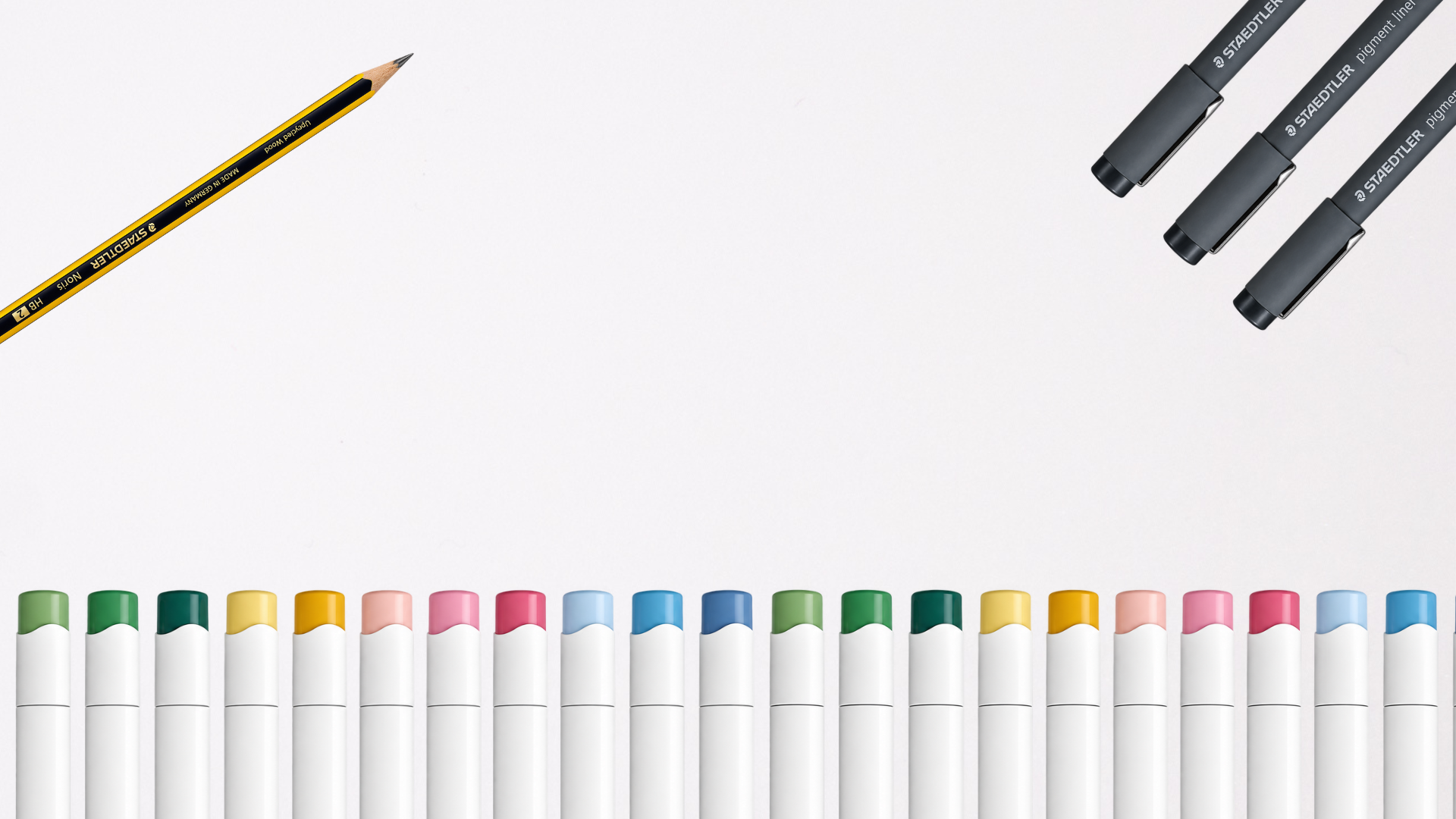
Any HB pencil and decent rubber will work. I use Staedtler because I trust the quality of their products when it comes to pencils and rubbers.
Pigment Liners/ Fineliners
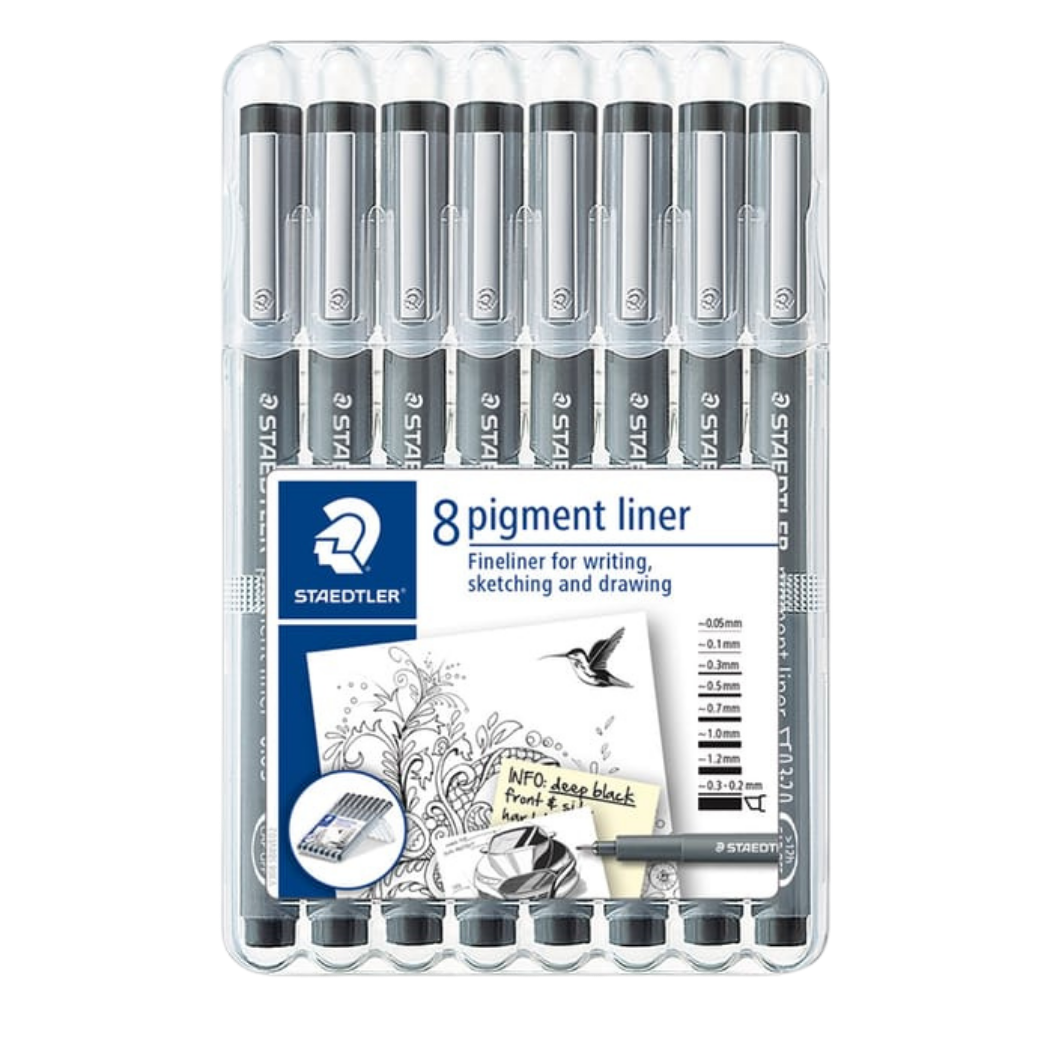
You can use a regular black pen, but they don’t work as well once you add colour. The reason I use pigment liners is for the clean lines and the fact they don’t easily smudge or bleed with my colours products.
My preferred brand is Staedtler Pigment Liners, as I find they are the least likely to bleed into my colours, whether colouring next to them or drawing over colour with them.
I recommend having three widths as a base:
A thin one, 0.05 or 0.1 for details and fine lines
A medium one, 0.3 or 0.5 for general drawing (I use this most often)
A thick one 0.8, 1.0 or 1.2 for filling in gaps
You can often buy a nice mixed width set which allows you to experiment and find the point width you like/ that suits your drawing style.
Alternatives include: Sakura Pigma Micron (which give a really deep black colour), Uni-Pen Fineliner or Ohuhu Fineliner (the Ohuhu ones are much lighter in colour than both Staedtler and Sakura, and don’t give the same finish). You can also find a selection of own brand and cheaper versions of pigments liners/ fineliners in most art shops and online.
Alcohol Marker Pens
The question I get asked most often is, “what marker pens do you use?”
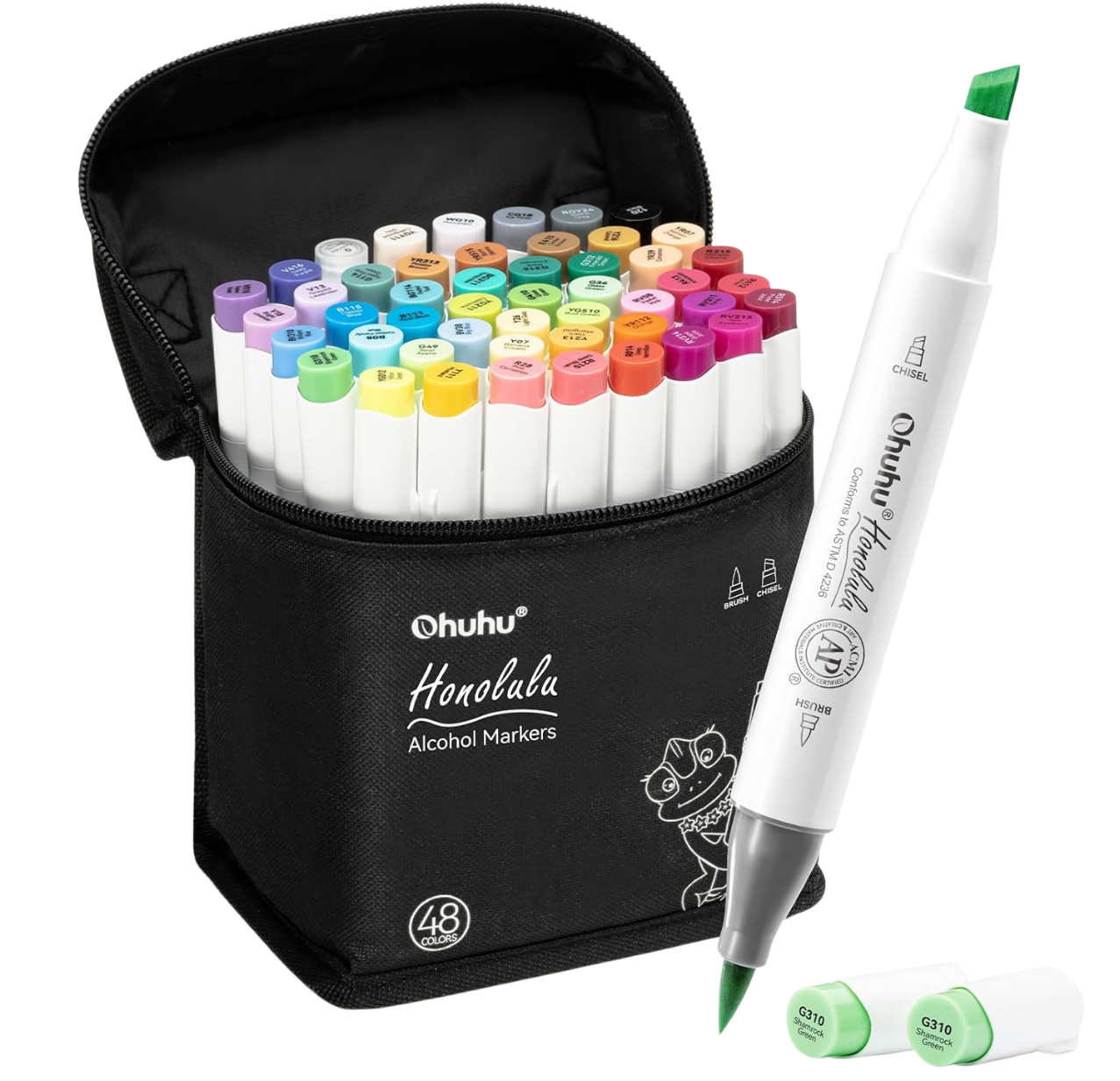
My preference is brush tipped alcohol makers. I use the Ohuhu Honolulu range with the brush and chisel tips. I use the brush end 99.9% of the time.
Alcohol makers are not cheap, if you are investing in them I recommend starting with a smaller set to make sure you like them before buying lots. The bigger sets also come with a lot of shades that are very similar/ you won’t use so often.
Alternatives: Copic (also expensive), own brand and local brand versions online or in art stores (it’s worth testing these out first as they can run out more quickly/ be streaky). As mentioned earlier, paper makes a huge difference to the finish.
If you are drawing with children or your children enjoy my drawings, depending on their age I would recommend water based marker as an alternative (they don’t blend as well but they aren’t permanent, so they are much safer for the household surroundings and your little ones in general).
Protect your table
Marker pens bleed through the paper (no matter how thick the paper or whether it’s advertised as non bleed or double sided), paints are messy, we need to protect the table or the next page in our sketch book from getting ruined.
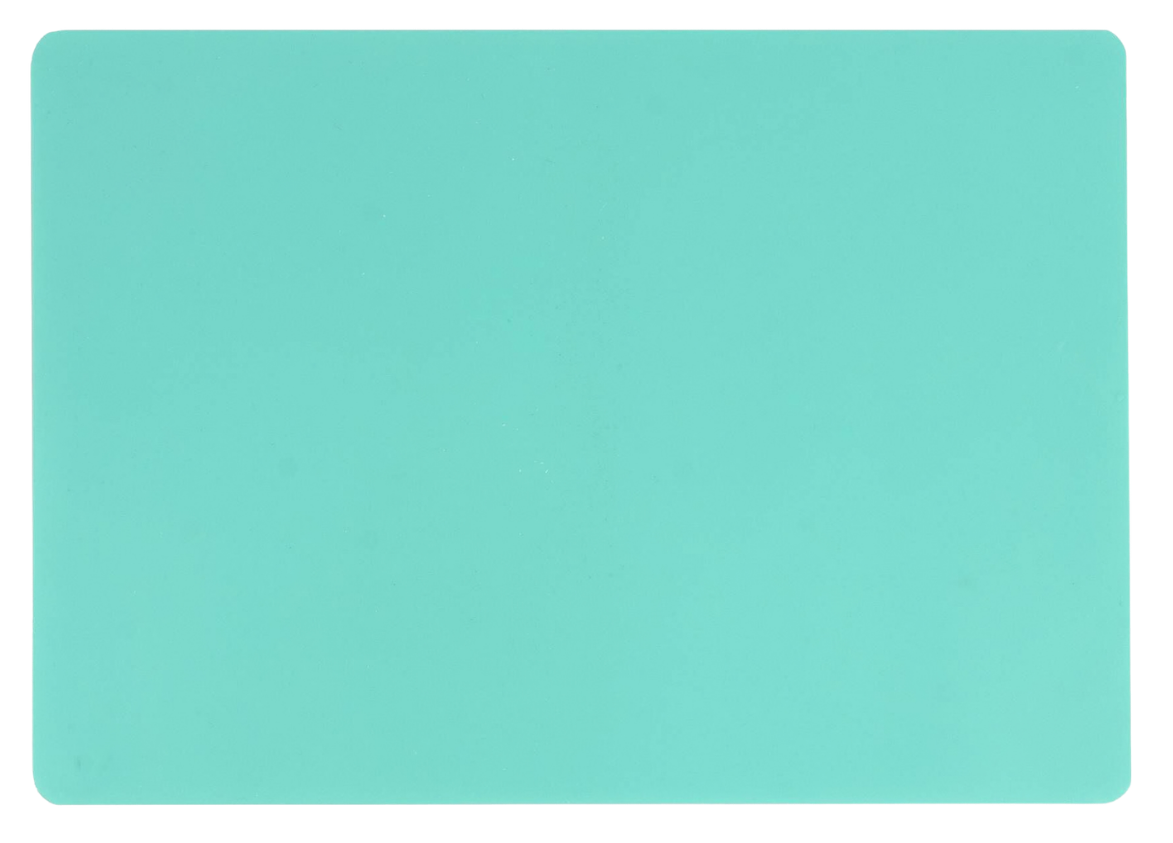
You can use a piece of scrap card, draw ontop of a old magazine or get a drawing board you don’t mind getting mucky. I use plastic sheets that come with the Ohuhu sketchbooks (from when I used to buy them). A great alternative to this is a silicone mat. These are pretty cheap and can be bought either online or from most art supply stores.
Watercolours
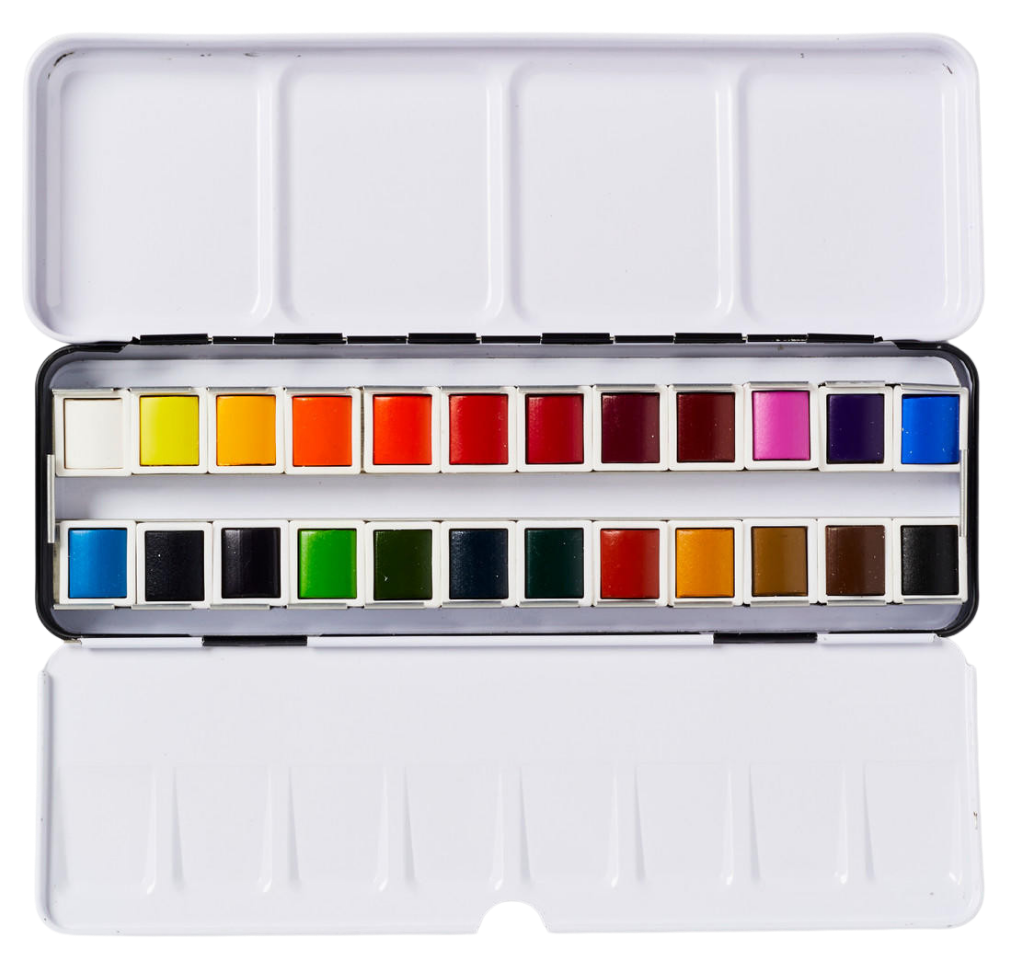
For quick and impactful background I use watercolours. This allows me to create depth and an interesting background without a huge investment of time.
I use an own brand set from a UK based art shop (Cass Art), most watercolours will be adequate for a background only use, you don’t need to spend lots of money.
For a brush I use a broad flat edge brush (approx 1-2cm in width).
As an alternative to watercolour you can also use gouache or acrylic. The most important factor; whichever paint you use, allow the paint to dry fully before putting pen on top.
Tip: you can speed up the drying process for watercolour by using a hair dryer or heat gun.
Paint Pens & Gel Pels
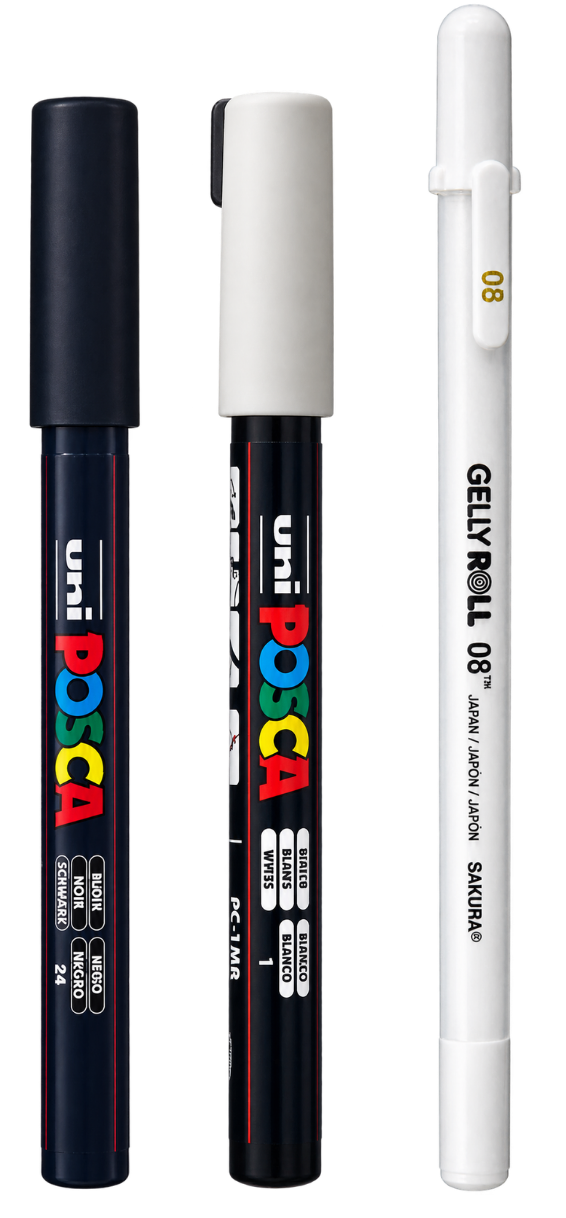
A few staples I use all the time are a black and white paint pen and a white gel Pen. These are brilliant to adding details and highlights to creations.
Paints pens: these are great for drawing on top of backgrounds done in watercolour or other paint mediums. They are also great for creating simple but impactful monochrome designs.
You can get paint pens in most art shops and online, I use Posca as I find the coverage and selection great. The two I use frequently are:
Black Posca PC-1 MR (pin type)
White Posca PC-1MR (pin type)
Gel Pens: finding a good gel pen is difficult, my personal preference is the Sakura Gelly Roll but even they can sometimes clog/ not provide full coverage. They are good for small highlights on colour and the best I have found so far.
When adding white to backgrounds, especially dark or black background I will use the white paint pen.
Circle Maker
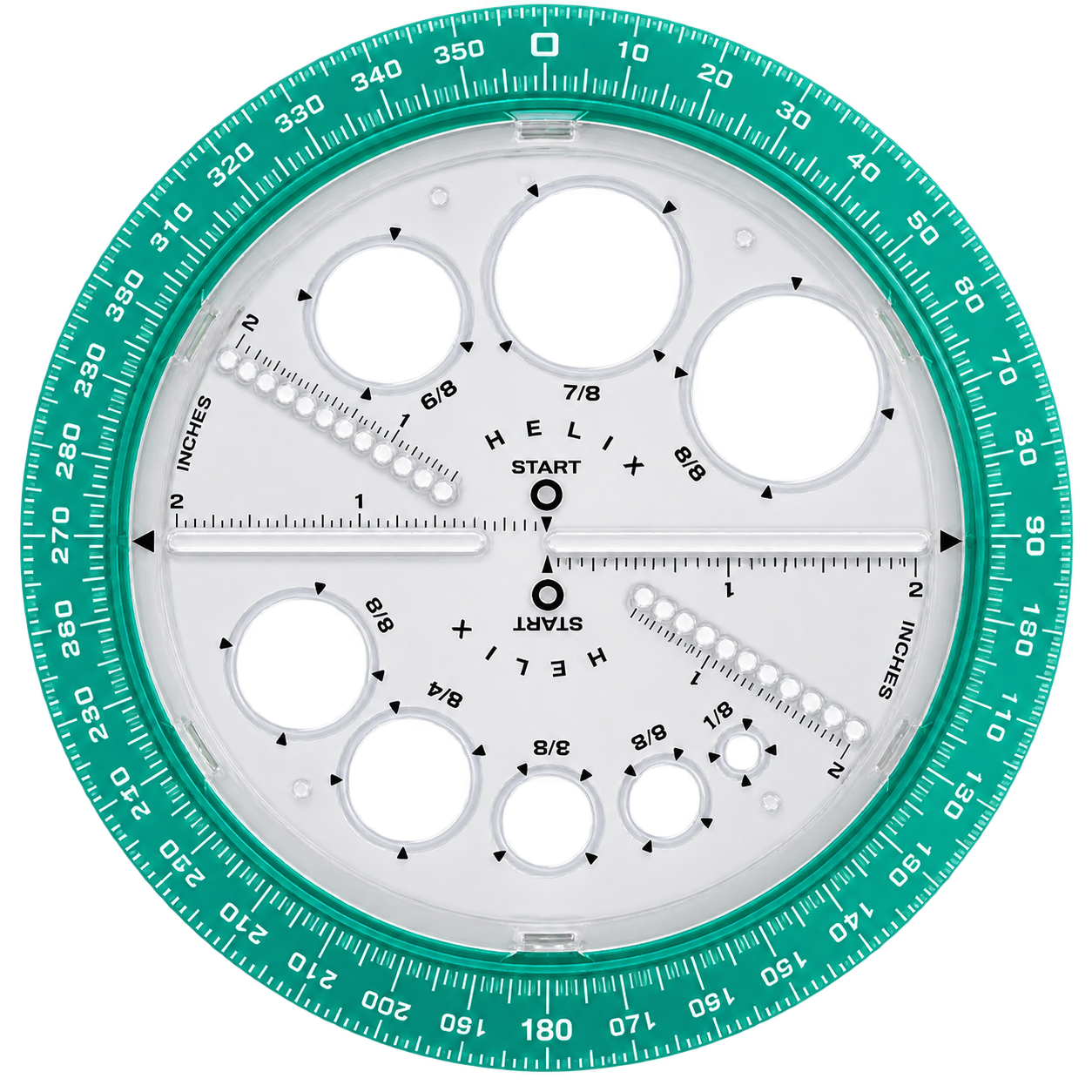
I often freehand my circles but when I want precision or I'm adding circles into a structured piece e.g. a grid template I like to use a stencil.
There are lots of circle makers and stencils out there which are relatively cheap and very easy to use. I most often use the Helix Angle and Circle Maker for my designs.
Contact Us
You can find our full FAQs HERE.
Please contact us if you can’t find the answer to your query or question and we will come back to you as soon as possible.